Responsible gourmet food!
The “Les Bios” range, organic mushrooms that honor their terroir. They are grown on 100% organic and pesticide-free substrates.
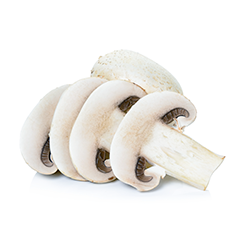
The whites
The Browns
White slices
Brown slices
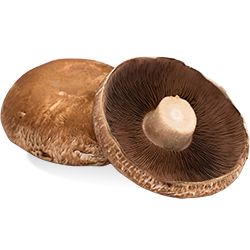
The Portobellos
How do our mushrooms grow?
1. Preparing the compost: the first step is to prepare the compost, a mixture of straw, manure and other organic matter.
This compost is pasteurized to eliminate pathogens and creates an optimal environment for fungal growth.
2. Seeding: once the compost is ready, it is seeded with mycelium, the vegetative part of the fungus.
The mycelium grows in the compost, feeding on the available nutrients.
3. Incubation: the seeded compost is then placed in temperature-controlled incubation chambers.
During this period, the mycelium fully colonizes the compost, forming a solid base for the growth of our mushrooms.
4. Casing: after incubation, a layer of top soil, known as “casing”, is added to the compost.
This layer retains moisture and stimulates the formation of mushroom fruiting bodies.
5. Fructification: Temperature and humidity conditions are carefully adjusted to favor fruiting.
Mushrooms start to appear and grow rapidly, passing from primordium to mature stage within a few days.
6. Harvesting: once the mushrooms have reached maturity, they are harvested by hand by our teams to guarantee their quality.
Harvesting can be done in several waves, each wave being called a “flush”.
Each cultivation cycle can produce two flushes before the compost is exhausted and renewed.
7. Cleaning and recycling: after the final harvest, the spent compost is removed and can be recycled as an organic soil improver.
The production room is cleaned and prepared for a new growing cycle.